
 EN
EN
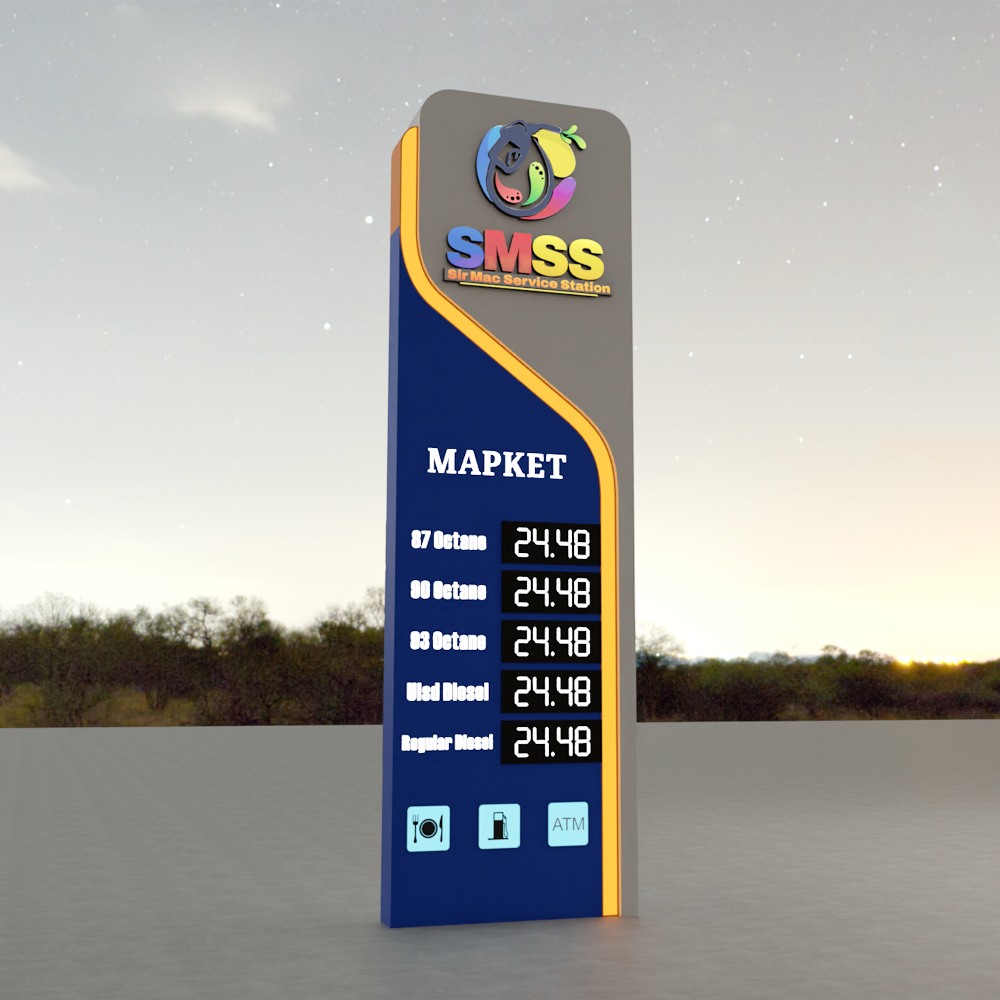
Multi-brand petrol stations face a unique challenge when designing their signage strategy: how to fairly and effectively allocate space among different fuel brands while maintaining clear visibility and brand recognition. This complex issue requires careful consideration of brand agreements, visual hierarchy, regulatory compliance, and customer navigation needs. The division of space on petrol station signs directly impacts brand equity, customer recognition, and ultimately sales performance for each participating fuel company.
Effective space allocation on shared petrol station signs requires balancing contractual obligations, visual design principles, and practical customer needs. The approach must consider factors such as brand investment levels, fuel volume commitments, geographical market presence, and local regulatory requirements. Modern petrol station signs serve multiple functions beyond simple brand identification, including price display, promotional messaging, and wayfinding assistance, making the space division challenge even more complex.

Brand Hierarchy and Investment-Based Allocation Models
Primary Brand Positioning Strategies
The most common approach to dividing space on petrol station signs involves establishing a clear brand hierarchy based on investment levels and contractual commitments. Primary brands typically receive the largest allocation, often occupying 50-60% of the available signage space. This positioning reflects their major financial commitment to the station operation and their role in driving customer traffic. Primary brand placement usually features prominent logo positioning, larger text sizing, and premium locations on pole signs and canopy displays.
Secondary brands receive proportionally smaller but still significant space allocations, typically ranging from 25-35% of the total signage area. These brands often contribute substantial fuel volumes or provide specialized products that complement the primary offering. Their positioning on petrol station signs emphasizes product differentiation while maintaining visual harmony with the overall design scheme.
The investment-based model ensures that brands contributing more resources to station operations receive corresponding visibility benefits. This approach creates clear incentives for fuel companies to increase their financial commitments while providing measurable returns on their signage investments.
Volume-Based Space Allocation Systems
Many multi-brand stations adopt volume-based allocation models that tie signage space directly to fuel sales performance or minimum volume guarantees. Under this system, brands that move higher volumes receive proportionally larger space allocations on petrol station signs. This creates dynamic signage arrangements that can adjust over time based on actual market performance rather than initial projections.
Volume-based systems often incorporate quarterly or annual review periods where space allocations are reassessed and potentially adjusted. High-performing brands may earn additional signage prominence, while underperforming partners might see their space reduced. This approach ensures that petrol station signs accurately reflect current market dynamics and customer preferences.
The volume-based model encourages active brand participation in marketing and customer acquisition efforts, as improved sales performance directly translates to enhanced signage visibility. This creates a positive feedback loop where better signage positioning drives more sales, which in turn justifies continued prominent placement.
Regulatory Compliance and Safety Considerations
Local Zoning and Signage Regulations
Municipal zoning laws significantly impact how space can be divided on petrol station signs, often imposing size limitations, height restrictions, and content requirements that supersede brand preferences. Many jurisdictions mandate specific spacing between competing brands, minimum text sizes for price displays, and standardized positioning for safety information. These regulations must be thoroughly understood before finalizing any space allocation agreements.
Compliance requirements vary considerably between urban and rural locations, with city centers typically imposing stricter limitations on signage dimensions and visual impact. Rural areas may allow larger petrol station signs but still maintain safety-related restrictions regarding sight lines, lighting levels, and content positioning. Understanding these local variations is essential for creating legally compliant multi-brand signage solutions.
Professional signage consultations often prove valuable in navigating complex regulatory environments, ensuring that proposed space divisions meet all applicable requirements while maximizing brand visibility opportunities. Early regulatory review prevents costly redesigns and installation delays that can impact brand launch timelines.
Safety Standards and Visibility Requirements
Safety considerations play a crucial role in determining how space should be divided on petrol station signs, particularly regarding emergency information placement, hazard warnings, and customer guidance elements. Emergency contact information, safety instructions, and regulatory compliance notices must receive dedicated space that cannot be compromised for brand promotion purposes.
Visibility standards require careful attention to color contrast, text sizing, and positioning hierarchy to ensure that critical safety information remains clearly readable under all lighting conditions. These requirements may limit brand color choices and design flexibility, necessitating creative solutions that maintain brand identity while meeting safety obligations.
Night visibility standards often require specific illumination levels and contrast ratios that influence how brands can be presented on petrol station signs. LED technology and modern lighting systems provide flexibility in meeting these requirements while maintaining attractive brand presentations throughout operating hours.
Design Principles for Effective Multi-Brand Integration
Visual Hierarchy and Information Flow
Effective multi-brand petrol station signs employ clear visual hierarchy principles that guide customer attention through a logical information flow. The most important information, typically fuel prices and primary brand identification, receives the largest and most prominent positioning. Secondary elements like additional services, promotional offers, and partner brands follow in decreasing order of visual priority.
Color coordination between multiple brands presents ongoing challenges that require careful planning and sometimes brand guideline adaptations. Successful installations often establish a unifying color palette or background treatment that allows individual brands to maintain their identity while creating overall visual coherence. This approach prevents petrol station signs from appearing cluttered or confusing to approaching customers.
Typography consistency across multiple brands helps maintain professional appearance and readability, even when different companies have varying font requirements. Establishing baseline typography standards while allowing brand-specific accent fonts can create attractive compromises that satisfy all parties while maintaining functional clarity.
Spatial Proportions and Balance
Proportional balance in multi-brand petrol station signs requires mathematical precision combined with aesthetic sensibility. The golden ratio and other design principles can guide space divisions that feel naturally balanced rather than rigidly segmented. These approaches often result in more attractive installations that enhance rather than detract from the overall station appearance.
Negative space management becomes critical when multiple brands compete for attention within limited signage areas. Proper spacing between elements prevents visual crowding while ensuring that each brand receives adequate prominence. Professional designers often recommend maintaining consistent margin ratios and alignment grids that create order within complex multi-brand layouts.
Scale relationships between different brand elements must consider viewing distances, vehicle speeds, and typical customer decision-making timeframes. Petrol station signs viewed from highways require different proportional relationships than those primarily seen by pedestrians or slow-moving local traffic.
Technology Integration and Dynamic Content Management
Digital Display Capabilities
Modern petrol station signs increasingly incorporate digital display technology that enables flexible space allocation and dynamic content rotation. Digital systems allow brands to share space temporally rather than spatially, with different brands receiving prominent positioning during various time periods or customer scenarios. This technology provides solutions for space division challenges that would be impossible with static signage.
Programmable LED displays can adjust brand positioning based on real-time factors such as fuel availability, pricing changes, promotional campaigns, or seasonal demand patterns. This flexibility allows multi-brand stations to optimize their signage effectiveness while providing fair exposure opportunities for all participating companies.
Remote content management systems enable centralized control over multiple petrol station signs, ensuring consistent brand presentation while allowing for local customization when needed. These systems often include scheduling features that automatically rotate content based on predetermined agreements and performance metrics.
Integration with Mobile and Digital Marketing
Contemporary petrol station signs serve as physical touchpoints in broader digital marketing ecosystems, requiring space allocation strategies that support QR codes, mobile app promotions, and social media integration. Each brand partner may require dedicated space for their digital engagement elements, adding complexity to traditional signage planning approaches.
Interactive elements such as touchscreens or NFC-enabled zones require careful positioning that provides convenient customer access while maintaining security and weather protection. These features often require dedicated space allocations that must be factored into overall brand positioning strategies.
Data collection capabilities built into modern petrol station signs can provide valuable insights into customer behavior and brand effectiveness, helping to inform future space allocation decisions based on actual performance metrics rather than assumptions or projections.
Contractual Frameworks and Performance Metrics
Agreement Structuring and Amendment Processes
Successful multi-brand signage arrangements require comprehensive contractual frameworks that clearly define space allocation methodologies, measurement criteria, and adjustment mechanisms. These agreements must address scenarios such as brand addition or removal, performance-based reallocations, and technology upgrades that might impact existing arrangements.
Amendment processes should include regular review periods where signage effectiveness can be evaluated and adjustments made based on objective performance criteria. These reviews often consider factors such as customer recognition surveys, sales correlation studies, and competitive market analysis to ensure that space allocations continue to serve all parties effectively.
Dispute resolution mechanisms become essential when multiple brands compete for premium signage positions on petrol station signs. Clear arbitration processes and objective measurement standards help prevent conflicts and maintain productive business relationships among station partners.
Performance Measurement and Optimization
Effective space allocation on petrol station signs requires ongoing measurement of visibility impact, customer recognition, and sales correlation. Modern analytics tools can track eye movement patterns, customer engagement duration, and conversion rates to optimize brand positioning decisions based on empirical evidence rather than subjective preferences.
ROI measurement methodologies help justify signage investments and inform future allocation decisions. These metrics often include cost-per-impression calculations, brand awareness lift measurements, and direct sales attribution analysis that demonstrate the value of specific signage positions and design approaches.
Continuous optimization processes ensure that petrol station signs evolve to meet changing market conditions, customer preferences, and technological capabilities. Regular testing of alternative layouts, messaging approaches, and space allocations helps identify improvement opportunities that benefit all participating brands.
FAQ
What percentage of signage space should the primary brand receive on multi-brand petrol stations?
Primary brands typically receive 50-60% of the total signage space on petrol station signs, reflecting their major investment commitment and traffic-driving responsibility. This allocation provides sufficient prominence for brand recognition while leaving adequate space for secondary partners and required safety information.
How do regulatory requirements affect brand space allocation decisions?
Local zoning laws, safety regulations, and municipal signage codes often impose mandatory space requirements for emergency information, safety warnings, and standardized content that must be accommodated before brand allocations are determined. These requirements can significantly impact available space for brand promotion and must be thoroughly researched during planning phases.
Can digital signage technology help solve multi-brand space allocation challenges?
Digital petrol station signs offer temporal space sharing solutions where brands can receive prominent positioning during different time periods rather than competing for static space. This technology enables dynamic content rotation, real-time adjustments based on performance metrics, and flexible allocation models that adapt to changing business conditions.
What factors should determine space allocation adjustments over time?
Space allocation adjustments should be based on objective performance metrics including fuel volume sales, customer recognition surveys, market share changes, and investment level modifications. Regular review periods, typically quarterly or annually, allow for data-driven reallocations that reflect actual business performance rather than initial projections or assumptions.
Table of Contents
- Brand Hierarchy and Investment-Based Allocation Models
- Regulatory Compliance and Safety Considerations
- Design Principles for Effective Multi-Brand Integration
- Technology Integration and Dynamic Content Management
- Contractual Frameworks and Performance Metrics
-
FAQ
- What percentage of signage space should the primary brand receive on multi-brand petrol stations?
- How do regulatory requirements affect brand space allocation decisions?
- Can digital signage technology help solve multi-brand space allocation challenges?
- What factors should determine space allocation adjustments over time?