
 EN
EN
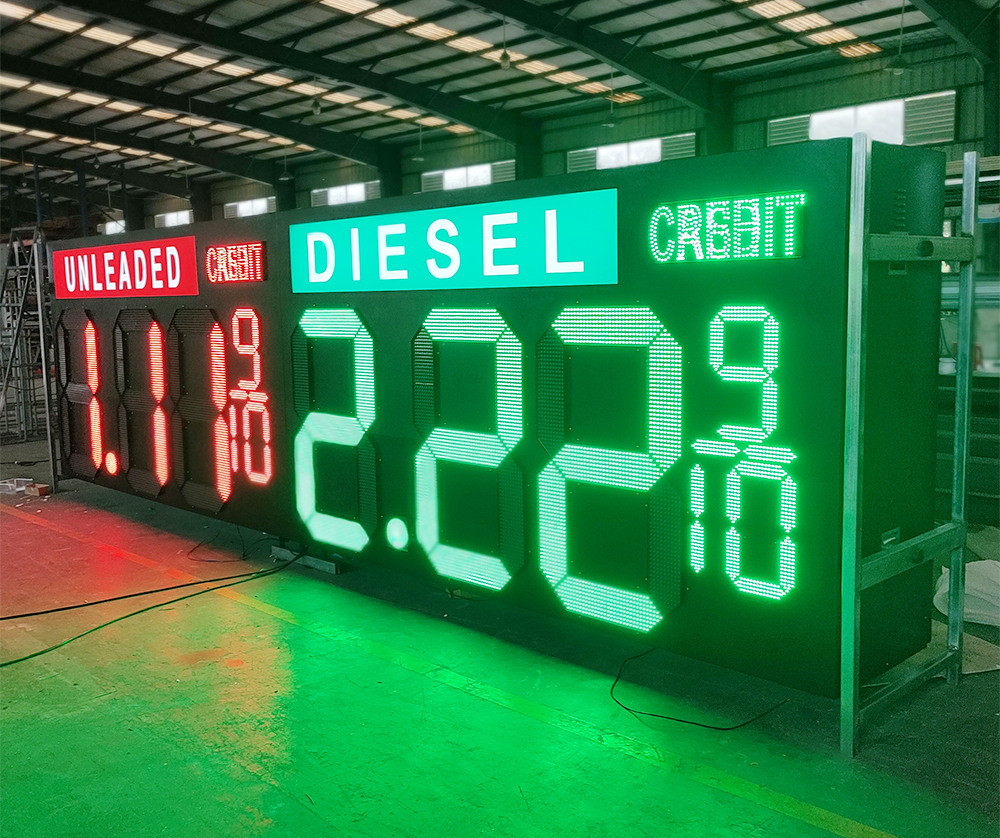
In the competitive fuel retail landscape, effective pricing displays serve as critical customer touchpoints that directly influence purchasing decisions and brand perception. The ongoing debate between monochrome and full-color led price boards continues to shape how gas stations approach their signage strategies. Understanding the psychological impact, visibility factors, and practical considerations behind each display type helps fuel retailers make informed decisions that balance customer attraction with operational efficiency. Modern led price boards have evolved significantly, offering various technological solutions that cater to different market segments and customer demographics.
Visual Psychology Behind Color and Monochrome Displays
Customer Attention Mechanisms
The human visual system responds differently to color variations and monochromatic displays, creating distinct psychological impacts that influence customer behavior. Full-color led price boards leverage the natural tendency of human eyes to be drawn toward vibrant, saturated colors, particularly red and amber hues commonly used in fuel pricing displays. Research in visual marketing indicates that color displays can increase attention retention by up to 40% compared to single-color alternatives. The brain processes color information faster than text, making full-color displays particularly effective for capturing the attention of passing motorists who have limited time to process pricing information.
Conversely, monochrome led price boards rely on high contrast and clarity to achieve visual impact, often utilizing the stark contrast between bright LED elements and dark backgrounds. This approach can be particularly effective in certain lighting conditions and for customers who prioritize clear, unambiguous pricing information. The simplicity of monochrome displays reduces visual noise, allowing customers to quickly process numerical information without the potential distraction of multiple color elements.
Brand Perception and Trust Factors
Color psychology plays a significant role in how customers perceive fuel station brands and their trustworthiness. Full-color led price boards enable gas stations to incorporate brand-specific colors and create cohesive visual identities that reinforce brand recognition. The ability to display multiple colors allows for creative pricing strategies, such as highlighting special promotions in distinct colors or using green elements to suggest environmental consciousness. These visual cues contribute to building brand loyalty and establishing emotional connections with customers.
Monochrome displays, particularly those using traditional amber or red LED colors, often convey a sense of reliability and professionalism that some customers associate with established, trustworthy businesses. The classic appearance of single-color led price boards can appeal to customers who prefer straightforward, no-nonsense pricing displays without the perceived complexity of multi-color systems.
Technical Performance and Visibility Comparison
Daytime Visibility Characteristics
Daytime visibility represents one of the most critical factors in evaluating led price boards effectiveness, as the majority of fuel purchases occur during daylight hours. Full-color displays face unique challenges in bright sunlight, as certain color combinations may become less distinguishable when competing with intense natural light. However, advances in LED technology have produced high-brightness color displays capable of maintaining excellent visibility even in direct sunlight. The key advantage of full-color systems lies in their ability to utilize high-contrast color combinations that can cut through ambient light effectively.
Monochrome led price boards, particularly those using amber or red LEDs, have traditionally excelled in daytime visibility due to their high luminosity and wavelength characteristics that penetrate bright ambient conditions. The focused energy of single-color LEDs often produces higher brightness levels per watt compared to color mixing systems, resulting in superior performance in challenging lighting conditions. This technical advantage makes monochrome displays particularly suitable for locations with high ambient light levels or direct sun exposure.
Nighttime and Low-Light Performance
Evening and nighttime operation presents different challenges and opportunities for both display types. Full-color led price boards can create striking visual effects in low-light conditions, with the ability to adjust color temperatures and intensities to optimize visibility without causing glare. The dynamic color capabilities allow for attractive nighttime displays that can serve as effective wayfinding tools for motorists seeking fuel stations in unfamiliar areas.
Monochrome displays typically provide consistent, predictable performance in low-light conditions, with excellent readability and minimal power consumption. The simplicity of single-color systems often translates to more reliable dimming capabilities and better integration with photocell sensors that automatically adjust brightness based on ambient light levels. This consistency can be particularly valuable for 24-hour fuel operations where reliable visibility is essential for customer safety and convenience.
Economic Considerations and Return on Investment
Initial Investment and Installation Costs
The financial implications of choosing between monochrome and full-color led price boards extend beyond simple purchase prices to encompass installation complexity, infrastructure requirements, and ongoing operational costs. Full-color display systems typically require higher initial investments due to the sophisticated LED technology and control systems necessary to produce accurate color reproduction. The installation process may also involve more complex wiring and control systems to manage multiple color channels and advanced display features.
Monochrome led price boards generally offer lower upfront costs and simpler installation procedures, making them attractive options for budget-conscious fuel retailers or those upgrading from legacy signage systems. The reduced complexity of single-color systems often translates to faster installation times and lower labor costs, providing immediate cost advantages that can improve project timelines and reduce business disruption during upgrades.
Long-Term Operational Expenses
Operational cost considerations play crucial roles in the total cost of ownership for led price boards over their expected lifespan. Full-color displays may consume more power due to the energy requirements of color mixing and advanced control systems, though modern LED efficiency improvements have significantly reduced this differential. Maintenance costs can vary depending on the complexity of the color management system and the availability of replacement components for multi-color LED arrays.
Monochrome systems typically offer advantages in terms of power consumption and maintenance simplicity, with fewer electronic components and more straightforward repair procedures. The longer operational history of single-color LED technology provides better predictability for maintenance scheduling and component replacement costs, allowing fuel station operators to budget more accurately for ongoing expenses.
Market Trends and Customer Preferences
Demographics and Target Audience Analysis
Understanding customer demographics provides valuable insights into the effectiveness of different led price boards approaches for specific market segments. Younger consumers, particularly millennials and Generation Z customers, often show stronger positive responses to full-color displays that align with their expectations for modern, technology-forward retail experiences. These demographics frequently associate color displays with innovation and progressive business practices, potentially influencing their choice of fuel retailers.
Older customer segments may demonstrate preferences for traditional monochrome displays that prioritize clarity and simplicity over visual complexity. These customers often value the straightforward nature of single-color led price boards and may perceive them as more trustworthy or reliable compared to what they might view as unnecessarily flashy color displays. Understanding these demographic preferences helps fuel retailers align their signage choices with their primary customer base.
Regional and Cultural Considerations
Geographic and cultural factors significantly influence the effectiveness of different display types, with regional preferences varying based on local market conditions and cultural norms. Urban markets often show greater acceptance of full-color led price boards, particularly in areas with high competition where visual differentiation becomes crucial for attracting customers. The fast-paced nature of urban environments may favor the attention-grabbing capabilities of color displays.
Rural and suburban markets may demonstrate different preferences, often favoring the reliability and simplicity of monochrome displays that align with more conservative aesthetic preferences. These markets may prioritize functional considerations over visual appeal, making the practical advantages of single-color led price boards more relevant to local customer expectations and business requirements.
Environmental Impact and Sustainability Factors
Energy Efficiency and Carbon Footprint
Environmental considerations increasingly influence business decisions across all industries, including the selection of led price boards for fuel retail applications. The energy efficiency differences between monochrome and full-color displays contribute to overall facility carbon footprints and operational sustainability goals. Modern LED technology has dramatically improved the efficiency of both display types, but monochrome systems typically maintain advantages in terms of power consumption per unit of light output.
Full-color led price boards have made significant strides in energy efficiency through advanced driver circuits and intelligent brightness management systems that optimize power consumption based on ambient conditions. These improvements help narrow the energy efficiency gap while providing the visual benefits of color displays. The sustainability equation must also consider the longevity and recyclability of different display technologies to provide accurate lifecycle environmental impact assessments.
Material Lifecycle and Disposal Considerations
The environmental impact of led price boards extends beyond operational energy consumption to include manufacturing resources, component longevity, and end-of-life disposal considerations. Full-color displays typically incorporate more complex electronic components and rare earth materials required for color LED production, potentially increasing their environmental footprint during manufacturing and disposal phases.
Monochrome systems often utilize more established LED technologies and simpler electronic systems that may offer advantages in terms of material efficiency and recyclability. The longer operational history of single-color LED technology provides better data on component longevity and failure modes, enabling more accurate predictions of replacement cycles and disposal requirements for environmental planning purposes.
FAQ
What factors should determine my choice between monochrome and full-color led price boards
The decision should be based on your specific location conditions, target customer demographics, budget constraints, and brand positioning goals. Consider daytime visibility requirements, local competition levels, installation complexity, and long-term operational costs. Full-color displays work well for high-traffic urban locations with younger demographics, while monochrome systems excel in straightforward applications where reliability and cost-effectiveness are priorities.
How do weather conditions affect the performance of different display types
Both monochrome and full-color led price boards are designed to withstand typical weather conditions, but performance can vary in extreme situations. Monochrome displays often maintain better visibility in very bright sunlight due to their focused light wavelengths, while full-color systems may offer advantages in varied lighting conditions through adaptive color management. Both types should meet appropriate IP ratings for weather resistance in your climate zone.
What maintenance requirements differ between monochrome and color displays
Monochrome led price boards typically require simpler maintenance procedures due to their single-color LED arrays and less complex control systems. Full-color displays may need more sophisticated diagnostic tools and technician expertise for color calibration and multi-channel LED management. Both types benefit from regular cleaning and periodic electrical inspections, but color systems may require additional attention to color balance and uniformity over time.
Can I upgrade from monochrome to full-color displays using existing infrastructure
Upgrading from monochrome to full-color led price boards may require infrastructure modifications depending on your current installation. Full-color systems typically need additional power capacity and more sophisticated control wiring to manage multiple color channels. Existing mounting structures may be compatible, but electrical connections and control systems will likely need upgrades to support the increased functionality and power requirements of color displays.
Table of Contents
- Visual Psychology Behind Color and Monochrome Displays
- Technical Performance and Visibility Comparison
- Economic Considerations and Return on Investment
- Market Trends and Customer Preferences
- Environmental Impact and Sustainability Factors
-
FAQ
- What factors should determine my choice between monochrome and full-color led price boards
- How do weather conditions affect the performance of different display types
- What maintenance requirements differ between monochrome and color displays
- Can I upgrade from monochrome to full-color displays using existing infrastructure